•  

US: Super Typhoon Bavi Slams Guam, Northern Marianas 2

Super Typhoon Bavi made landfall Monday, July 6, passing directly over Rota in the Northern Mariana Islands around 8 a.m. local time, with sustained winds over 150 mph. Guam and nearby islands also reported major damage from the storm.

  •  

US: North Dakota Sees Powerful Winds Amid Tornado-Producing Storm

Severe weather swept across the upper Midwest on Friday, June 20, bringing powerful winds and leaving at least 3 dead in North Dakota as a tornado ripped through the area.

  •  
Battle between major Japanese gangster syndicates

Battle between major Japanese gangster syndicates

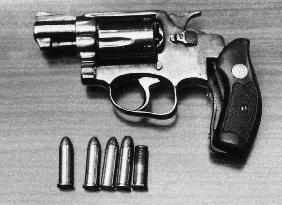
TOKYO, Japan, April 25 Kyodo - File photo taken on April 18, 1985, shows a pistol and bullets confiscated by police who were investigating a fierce battle between Japan's two largest underground gangster syndicates -- Yamaguchi-gumi and Ichiwa-kai -- in the 1980s.

  •  
Fierce battle between major Japanese underground syndicates

Fierce battle between major Japanese underground syndicates

KOBE, Japan, April 25 Kyodo - A bullet hole (arrow mark) is seen on the front window of a vehicle ridden by members of the Ichiwa-kai underground gangster syndicate in Kobe, Hyogo Prefecture, on April 14, 1985. A shooter belonging to Ichiwa-kai's rival, Yamaguchi-gumi, opened fire at the vehicle when it was parked at a crossing in the western Japan city earlier in the day.

  •  
Major Japanese underground syndicate

Major Japanese underground syndicate

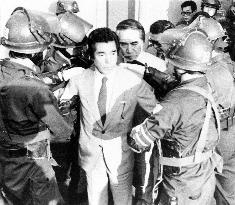
CHITOSE, Japan, April 25 Kyodo - Kazuo Nakanishi (front) and Saizo Kishimoto (back), both senior members of the Yamaguchi-gumi underground gangster syndicate, have their bodies checked by riot police officers upon their arrival at Chitose airport in Chitose on the northernmost Japanese main island of Hokkaido on April 18, 1985.

  •  
Fierce battle between major Japanese underground syndicates

Fierce battle between major Japanese underground syndicates

YAWATA, Japan, April 25 Kyodo - Police investigators search a residence of the leader of a group affiliated with the Ichiwa-kai underground gangster syndicate in Yawata, Kyoto Prefecture, on April 14, 1985, following a shooting incident blamed on Ichiwa-kai's rival, Yamaguchi-gumi, that left two affiliate group members injured.

  •  
Fierce battle between major Japanese underground syndicates

Fierce battle between major Japanese underground syndicates

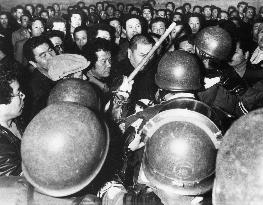
OSAKA, Japan, April 25 Kyodo - Riot police officers confront members of the Yamaguchi-gumi underground gangster syndicate to keep them at bay from Osaka Police Hospital in the western Japan city on Jan. 26, 1985. The syndicate's leader Masahisa Takenaka was admitted to the hospital earlier in the day after being shot by members belonging to the syndicate's rival, Ichiwa-kai.

  •  
XINHUA PHOTOS OF THE DAY

XINHUA PHOTOS OF THE DAY

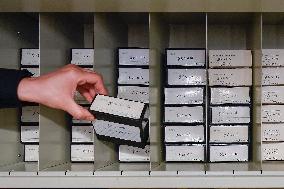
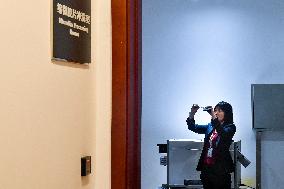
(240423) -- BEIJING, April 23, 2024 (Xinhua) -- Zheng Shanji checks microfilm at Jilin Provincial Library in Changchun, northeast China's Jilin Province, April 22, 2024. Microfilm is an effective way to preserve ancient texts and documents. China has started using micrographics technology to preserve invaluable documents on a large scale in 1985, since the establishment of the National Library's center for microfilm reproduction. Since then, over 40 public libraries have been engaging in using microfilm for document preservation. Jilin Provincial Library is one of the first batch of microfilm reproduction libraries in China. (Xinhua/Xu Chang)

  •  
CHINA-JILIN-MICROFILM-DOCUMENT PRESERVATION (CN)

CHINA-JILIN-MICROFILM-DOCUMENT PRESERVATION (CN)

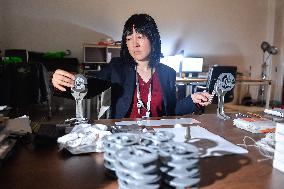
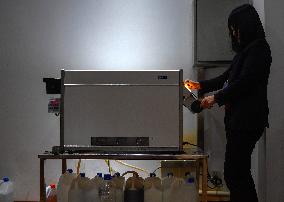
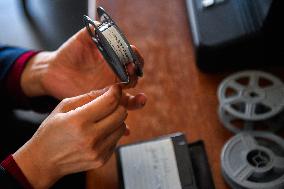
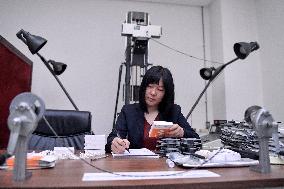
(240422) -- CHANGCHUN, April 22, 2024 (Xinhua) -- Zheng Shanji checks microfilm at Jilin Provincial Library in Changchun, northeast China's Jilin Province, April 22, 2024. Microfilm is an effective way to preserve ancient texts and documents. China has started using micrographics technology to preserve invaluable documents on a large scale in 1985, since the establishment of the National Library's center for microfilm reproduction. Since then, over 40 public libraries have been engaging in using microfilm for document preservation. Jilin Provincial Library is one of the first batch of microfilm reproduction libraries in China. As a staff member of the library, Zheng Shanji's responsibility is to digitalize the microfilm document. The microfilm work involves many aspects and requires a series of professional operations, including shooting, washing, cataloging, copying, digital conversion and so on. "I take different responsibilities in my work, and the 'models' are the precious ancient books and historica

  •  
CHINA-JILIN-MICROFILM-DOCUMENT PRESERVATION (CN)

CHINA-JILIN-MICROFILM-DOCUMENT PRESERVATION (CN)

(240422) -- CHANGCHUN, April 22, 2024 (Xinhua) -- Zheng Shanji searches for archived microfilm at Jilin Provincial Library in Changchun, northeast China's Jilin Province, April 22, 2024. Microfilm is an effective way to preserve ancient texts and documents. China has started using micrographics technology to preserve invaluable documents on a large scale in 1985, since the establishment of the National Library's center for microfilm reproduction. Since then, over 40 public libraries have been engaging in using microfilm for document preservation. Jilin Provincial Library is one of the first batch of microfilm reproduction libraries in China. As a staff member of the library, Zheng Shanji's responsibility is to digitalize the microfilm document. The microfilm work involves many aspects and requires a series of professional operations, including shooting, washing, cataloging, copying, digital conversion and so on. "I take different responsibilities in my work, and the 'models' are the precious ancient book

  •  
CHINA-JILIN-MICROFILM-DOCUMENT PRESERVATION (CN)

CHINA-JILIN-MICROFILM-DOCUMENT PRESERVATION (CN)

(240422) -- CHANGCHUN, April 22, 2024 (Xinhua) -- Zheng Shanji searches for archived microfilm at Jilin Provincial Library in Changchun, northeast China's Jilin Province, April 22, 2024. Microfilm is an effective way to preserve ancient texts and documents. China has started using micrographics technology to preserve invaluable documents on a large scale in 1985, since the establishment of the National Library's center for microfilm reproduction. Since then, over 40 public libraries have been engaging in using microfilm for document preservation. Jilin Provincial Library is one of the first batch of microfilm reproduction libraries in China. As a staff member of the library, Zheng Shanji's responsibility is to digitalize the microfilm document. The microfilm work involves many aspects and requires a series of professional operations, including shooting, washing, cataloging, copying, digital conversion and so on. "I take different responsibilities in my work, and the 'models' are the precious ancient book

  •  
CHINA-JILIN-MICROFILM-DOCUMENT PRESERVATION (CN)

CHINA-JILIN-MICROFILM-DOCUMENT PRESERVATION (CN)

(240422) -- CHANGCHUN, April 22, 2024 (Xinhua) -- Zheng Shanji checks details of microfilm with a magnifying glass at Jilin Provincial Library in Changchun, northeast China's Jilin Province, April 22, 2024. Microfilm is an effective way to preserve ancient texts and documents. China has started using micrographics technology to preserve invaluable documents on a large scale in 1985, since the establishment of the National Library's center for microfilm reproduction. Since then, over 40 public libraries have been engaging in using microfilm for document preservation. Jilin Provincial Library is one of the first batch of microfilm reproduction libraries in China. As a staff member of the library, Zheng Shanji's responsibility is to digitalize the microfilm document. The microfilm work involves many aspects and requires a series of professional operations, including shooting, washing, cataloging, copying, digital conversion and so on. "I take different responsibilities in my work, and the 'models' are the p

  •  
CHINA-JILIN-MICROFILM-DOCUMENT PRESERVATION (CN)

CHINA-JILIN-MICROFILM-DOCUMENT PRESERVATION (CN)

(240422) -- CHANGCHUN, April 22, 2024 (Xinhua) -- Zheng Shanji prints microfilm at Jilin Provincial Library in Changchun, northeast China's Jilin Province, April 22, 2024. Microfilm is an effective way to preserve ancient texts and documents. China has started using micrographics technology to preserve invaluable documents on a large scale in 1985, since the establishment of the National Library's center for microfilm reproduction. Since then, over 40 public libraries have been engaging in using microfilm for document preservation. Jilin Provincial Library is one of the first batch of microfilm reproduction libraries in China. As a staff member of the library, Zheng Shanji's responsibility is to digitalize the microfilm document. The microfilm work involves many aspects and requires a series of professional operations, including shooting, washing, cataloging, copying, digital conversion and so on. "I take different responsibilities in my work, and the 'models' are the precious ancient books and historica

  •  
CHINA-JILIN-MICROFILM-DOCUMENT PRESERVATION (CN)

CHINA-JILIN-MICROFILM-DOCUMENT PRESERVATION (CN)

(240422) -- CHANGCHUN, April 22, 2024 (Xinhua) -- Zheng Shanji checks microfilm at Jilin Provincial Library in Changchun, northeast China's Jilin Province, April 22, 2024. Microfilm is an effective way to preserve ancient texts and documents. China has started using micrographics technology to preserve invaluable documents on a large scale in 1985, since the establishment of the National Library's center for microfilm reproduction. Since then, over 40 public libraries have been engaging in using microfilm for document preservation. Jilin Provincial Library is one of the first batch of microfilm reproduction libraries in China. As a staff member of the library, Zheng Shanji's responsibility is to digitalize the microfilm document. The microfilm work involves many aspects and requires a series of professional operations, including shooting, washing, cataloging, copying, digital conversion and so on. "I take different responsibilities in my work, and the 'models' are the precious ancient books and historica

  •  
CHINA-JILIN-MICROFILM-DOCUMENT PRESERVATION (CN)

CHINA-JILIN-MICROFILM-DOCUMENT PRESERVATION (CN)

(240422) -- CHANGCHUN, April 22, 2024 (Xinhua) -- Zheng Shanji checks microfilm at Jilin Provincial Library in Changchun, northeast China's Jilin Province, April 22, 2024. Microfilm is an effective way to preserve ancient texts and documents. China has started using micrographics technology to preserve invaluable documents on a large scale in 1985, since the establishment of the National Library's center for microfilm reproduction. Since then, over 40 public libraries have been engaging in using microfilm for document preservation. Jilin Provincial Library is one of the first batch of microfilm reproduction libraries in China. As a staff member of the library, Zheng Shanji's responsibility is to digitalize the microfilm document. The microfilm work involves many aspects and requires a series of professional operations, including shooting, washing, cataloging, copying, digital conversion and so on. "I take different responsibilities in my work, and the 'models' are the precious ancient books and historica

  •  
CHINA-JILIN-MICROFILM-DOCUMENT PRESERVATION (CN)

CHINA-JILIN-MICROFILM-DOCUMENT PRESERVATION (CN)

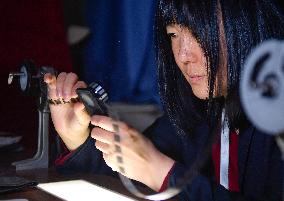
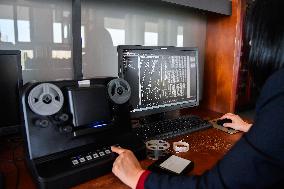
(240422) -- CHANGCHUN, April 22, 2024 (Xinhua) -- Zheng Shanji reviews documents through microfilm reader at Jilin Provincial Library in Changchun, northeast China's Jilin Province, April 22, 2024. Microfilm is an effective way to preserve ancient texts and documents. China has started using micrographics technology to preserve invaluable documents on a large scale in 1985, since the establishment of the National Library's center for microfilm reproduction. Since then, over 40 public libraries have been engaging in using microfilm for document preservation. Jilin Provincial Library is one of the first batch of microfilm reproduction libraries in China. As a staff member of the library, Zheng Shanji's responsibility is to digitalize the microfilm document. The microfilm work involves many aspects and requires a series of professional operations, including shooting, washing, cataloging, copying, digital conversion and so on. "I take different responsibilities in my work, and the 'models' are the precious a

  •  
CHINA-JILIN-MICROFILM-DOCUMENT PRESERVATION (CN)

CHINA-JILIN-MICROFILM-DOCUMENT PRESERVATION (CN)

(240422) -- CHANGCHUN, April 22, 2024 (Xinhua) -- Zheng Shanji checks microfilm at Jilin Provincial Library in Changchun, northeast China's Jilin Province, April 22, 2024. Microfilm is an effective way to preserve ancient texts and documents. China has started using micrographics technology to preserve invaluable documents on a large scale in 1985, since the establishment of the National Library's center for microfilm reproduction. Since then, over 40 public libraries have been engaging in using microfilm for document preservation. Jilin Provincial Library is one of the first batch of microfilm reproduction libraries in China. As a staff member of the library, Zheng Shanji's responsibility is to digitalize the microfilm document. The microfilm work involves many aspects and requires a series of professional operations, including shooting, washing, cataloging, copying, digital conversion and so on. "I take different responsibilities in my work, and the 'models' are the precious ancient books and historica

  •  
CHINA-JILIN-MICROFILM-DOCUMENT PRESERVATION (CN)

CHINA-JILIN-MICROFILM-DOCUMENT PRESERVATION (CN)

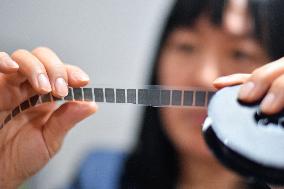
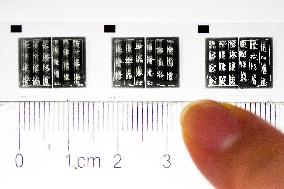
(240422) -- CHANGCHUN, April 22, 2024 (Xinhua) -- This photo taken on April 22, 2024 shows microfilm at Jilin Provincial Library in Changchun, northeast China's Jilin Province. Microfilm is an effective way to preserve ancient texts and documents. China has started using micrographics technology to preserve invaluable documents on a large scale in 1985, since the establishment of the National Library's center for microfilm reproduction. Since then, over 40 public libraries have been engaging in using microfilm for document preservation. Jilin Provincial Library is one of the first batch of microfilm reproduction libraries in China. As a staff member of the library, Zheng Shanji's responsibility is to digitalize the microfilm document. The microfilm work involves many aspects and requires a series of professional operations, including shooting, washing, cataloging, copying, digital conversion and so on. "I take different responsibilities in my work, and the 'models' are the precious ancient books and hist

  •  
CHINA-JILIN-MICROFILM-DOCUMENT PRESERVATION (CN)

CHINA-JILIN-MICROFILM-DOCUMENT PRESERVATION (CN)

(240422) -- CHANGCHUN, April 22, 2024 (Xinhua) -- Zheng Shanji edits the catalog information of microfilm at Jilin Provincial Library in Changchun, northeast China's Jilin Province, April 22, 2024. Microfilm is an effective way to preserve ancient texts and documents. China has started using micrographics technology to preserve invaluable documents on a large scale in 1985, since the establishment of the National Library's center for microfilm reproduction. Since then, over 40 public libraries have been engaging in using microfilm for document preservation. Jilin Provincial Library is one of the first batch of microfilm reproduction libraries in China. As a staff member of the library, Zheng Shanji's responsibility is to digitalize the microfilm document. The microfilm work involves many aspects and requires a series of professional operations, including shooting, washing, cataloging, copying, digital conversion and so on. "I take different responsibilities in my work, and the 'models' are the precious a

  •  
CHINA-JILIN-MICROFILM-DOCUMENT PRESERVATION (CN)

CHINA-JILIN-MICROFILM-DOCUMENT PRESERVATION (CN)

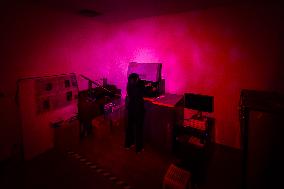
(240422) -- CHANGCHUN, April 22, 2024 (Xinhua) -- Zheng Shanji develops microfilm at Jilin Provincial Library in Changchun, northeast China's Jilin Province, April 22, 2024. Microfilm is an effective way to preserve ancient texts and documents. China has started using micrographics technology to preserve invaluable documents on a large scale in 1985, since the establishment of the National Library's center for microfilm reproduction. Since then, over 40 public libraries have been engaging in using microfilm for document preservation. Jilin Provincial Library is one of the first batch of microfilm reproduction libraries in China. As a staff member of the library, Zheng Shanji's responsibility is to digitalize the microfilm document. The microfilm work involves many aspects and requires a series of professional operations, including shooting, washing, cataloging, copying, digital conversion and so on. "I take different responsibilities in my work, and the 'models' are the precious ancient books and histori

  •  
CHINA-JILIN-MICROFILM-DOCUMENT PRESERVATION (CN)

CHINA-JILIN-MICROFILM-DOCUMENT PRESERVATION (CN)

(240422) -- CHANGCHUN, April 22, 2024 (Xinhua) -- Zheng Shanji prepares to archive microfilm at Jilin Provincial Library in Changchun, northeast China's Jilin Province, April 22, 2024. Microfilm is an effective way to preserve ancient texts and documents. China has started using micrographics technology to preserve invaluable documents on a large scale in 1985, since the establishment of the National Library's center for microfilm reproduction. Since then, over 40 public libraries have been engaging in using microfilm for document preservation. Jilin Provincial Library is one of the first batch of microfilm reproduction libraries in China. As a staff member of the library, Zheng Shanji's responsibility is to digitalize the microfilm document. The microfilm work involves many aspects and requires a series of professional operations, including shooting, washing, cataloging, copying, digital conversion and so on. "I take different responsibilities in my work, and the 'models' are the precious ancient books

  •  
CHINA-JILIN-MICROFILM-DOCUMENT PRESERVATION (CN)

CHINA-JILIN-MICROFILM-DOCUMENT PRESERVATION (CN)

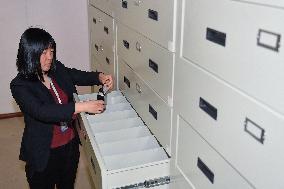
(240422) -- CHANGCHUN, April 22, 2024 (Xinhua) -- Zheng Shanji checks the information of microfilm at Jilin Provincial Library in Changchun, northeast China's Jilin Province, April 22, 2024. Microfilm is an effective way to preserve ancient texts and documents. China has started using micrographics technology to preserve invaluable documents on a large scale in 1985, since the establishment of the National Library's center for microfilm reproduction. Since then, over 40 public libraries have been engaging in using microfilm for document preservation. Jilin Provincial Library is one of the first batch of microfilm reproduction libraries in China. As a staff member of the library, Zheng Shanji's responsibility is to digitalize the microfilm document. The microfilm work involves many aspects and requires a series of professional operations, including shooting, washing, cataloging, copying, digital conversion and so on. "I take different responsibilities in my work, and the 'models' are the precious ancient

  •  
CHINA-JILIN-MICROFILM-DOCUMENT PRESERVATION (CN)

CHINA-JILIN-MICROFILM-DOCUMENT PRESERVATION (CN)

(240422) -- CHANGCHUN, April 22, 2024 (Xinhua) -- Zheng Shanji checks the information of microfilm at Jilin Provincial Library in Changchun, northeast China's Jilin Province, April 22, 2024. Microfilm is an effective way to preserve ancient texts and documents. China has started using micrographics technology to preserve invaluable documents on a large scale in 1985, since the establishment of the National Library's center for microfilm reproduction. Since then, over 40 public libraries have been engaging in using microfilm for document preservation. Jilin Provincial Library is one of the first batch of microfilm reproduction libraries in China. As a staff member of the library, Zheng Shanji's responsibility is to digitalize the microfilm document. The microfilm work involves many aspects and requires a series of professional operations, including shooting, washing, cataloging, copying, digital conversion and so on. "I take different responsibilities in my work, and the 'models' are the precious ancient

  •  
XINHUA PHOTOS OF THE DAY

XINHUA PHOTOS OF THE DAY

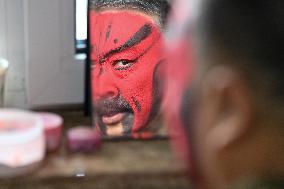
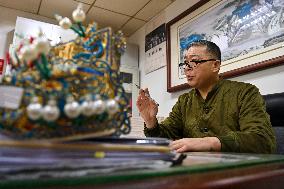
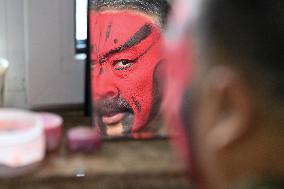
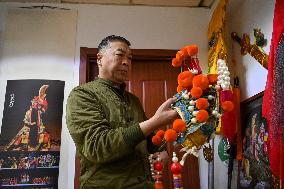
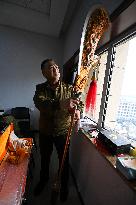
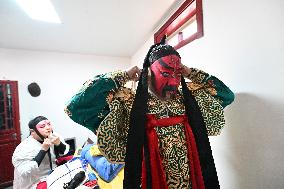
(240403) -- BEIJING, April 3, 2024 (Xinhua) -- Wu Lingyun prepares for a performance in Yingze District of Taiyuan, north China's Shanxi Province, Feb. 2, 2024. Jin Opera, originated in the central area of Shanxi Province, is a representative genre of opera in Shanxi. It was listed as a national intangible cultural heritage in 2006. Wu Lingyun, a representative inheritor of Jin Opera, was born in a family of Jin Opera actors and entered the opera troupe at the age of 12. In 1985, when he was 21, Wu started to play the role of Guan Yu, an ancient general known for his loyalty and bravery in battles and widely revered by the Chinese. In order to play the role well, Wu went through books on the history of Three Kingdoms period (220-280 A.D.) of China, learned from experienced actors and other genres of Chinese operas, and drew inspirations from sculpture, painting, shadow play and other art forms. After years of accumulation, the role of Guan Yu has become Wu Lingyun's representative performance. Decades o

  •  
(ChineseToday)CHINA-SHANXI-JIN OPERA-INHERITOR (CN)

(ChineseToday)CHINA-SHANXI-JIN OPERA-INHERITOR (CN)

(240402) -- TAIYUAN, April 2, 2024 (Xinhua) -- Wu Lingyun practises at home in Xinghualing District of Taiyuan, north China's Shanxi Province, March 26, 2024. Jin Opera, originated in the central area of Shanxi Province, is a representative genre of opera in Shanxi. It was listed as a national intangible cultural heritage in 2006. Wu Lingyun, a representative inheritor of Jin Opera, was born in a family of Jin Opera actors and entered the opera troupe at the age of 12. In 1985, when he was 21, Wu started to play the role of Guan Yu, an ancient general known for his loyalty and bravery in battles and widely revered by the Chinese. In order to play the role well, Wu went through books on the history of Three Kingdoms period (220-280 A.D.) of China, learned from experienced actors and other genres of Chinese operas, and drew inspirations from sculpture, painting, shadow play and other art forms. After years of accumulation, the role of Guan Yu has become Wu Lingyun's representative performance. Decades of

  •  
(ChineseToday)CHINA-SHANXI-JIN OPERA-INHERITOR (CN)

(ChineseToday)CHINA-SHANXI-JIN OPERA-INHERITOR (CN)

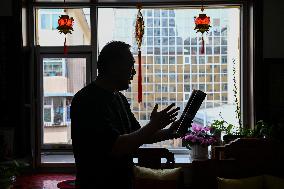
(240402) -- TAIYUAN, April 2, 2024 (Xinhua) -- Wu Lingyun reads a book at the Jin Opera art research institute in Taiyuan, north China's Shanxi Province, Feb. 6, 2024. Jin Opera, originated in the central area of Shanxi Province, is a representative genre of opera in Shanxi. It was listed as a national intangible cultural heritage in 2006. Wu Lingyun, a representative inheritor of Jin Opera, was born in a family of Jin Opera actors and entered the opera troupe at the age of 12. In 1985, when he was 21, Wu started to play the role of Guan Yu, an ancient general known for his loyalty and bravery in battles and widely revered by the Chinese. In order to play the role well, Wu went through books on the history of Three Kingdoms period (220-280 A.D.) of China, learned from experienced actors and other genres of Chinese operas, and drew inspirations from sculpture, painting, shadow play and other art forms. After years of accumulation, the role of Guan Yu has become Wu Lingyun's representative performance. De

  •  
(ChineseToday)CHINA-SHANXI-JIN OPERA-INHERITOR (CN)

(ChineseToday)CHINA-SHANXI-JIN OPERA-INHERITOR (CN)

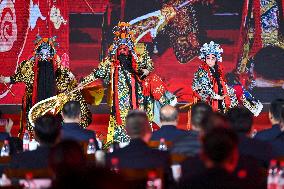
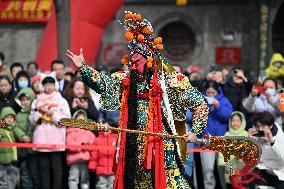
(240402) -- TAIYUAN, April 2, 2024 (Xinhua) -- Wu Lingyun stages a performance in Yingze District of Taiyuan, north China's Shanxi Province, Feb. 2, 2024. Jin Opera, originated in the central area of Shanxi Province, is a representative genre of opera in Shanxi. It was listed as a national intangible cultural heritage in 2006. Wu Lingyun, a representative inheritor of Jin Opera, was born in a family of Jin Opera actors and entered the opera troupe at the age of 12. In 1985, when he was 21, Wu started to play the role of Guan Yu, an ancient general known for his loyalty and bravery in battles and widely revered by the Chinese. In order to play the role well, Wu went through books on the history of Three Kingdoms period (220-280 A.D.) of China, learned from experienced actors and other genres of Chinese operas, and drew inspirations from sculpture, painting, shadow play and other art forms. After years of accumulation, the role of Guan Yu has become Wu Lingyun's representative performance. Decades of stag

  •  
(ChineseToday)CHINA-SHANXI-JIN OPERA-INHERITOR (CN)

(ChineseToday)CHINA-SHANXI-JIN OPERA-INHERITOR (CN)

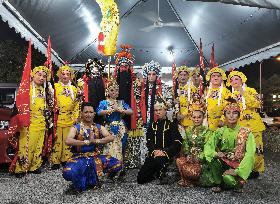
(240402) -- TAIYUAN, April 2, 2024 (Xinhua) -- This file photo taken on Oct. 23, 2019 shows Wu Lingyun (4th L, back) and his troupe members posing for a photo with local actors during an international Guan Gong cultural festival in Malaysia. Jin Opera, originated in the central area of Shanxi Province, is a representative genre of opera in Shanxi. It was listed as a national intangible cultural heritage in 2006. Wu Lingyun, a representative inheritor of Jin Opera, was born in a family of Jin Opera actors and entered the opera troupe at the age of 12. In 1985, when he was 21, Wu started to play the role of Guan Yu, an ancient general known for his loyalty and bravery in battles and widely revered by the Chinese. In order to play the role well, Wu went through books on the history of Three Kingdoms period (220-280 A.D.) of China, learned from experienced actors and other genres of Chinese operas, and drew inspirations from sculpture, painting, shadow play and other art forms. After years of accumulation, the

  •  
(ChineseToday)CHINA-SHANXI-JIN OPERA-INHERITOR (CN)

(ChineseToday)CHINA-SHANXI-JIN OPERA-INHERITOR (CN)

(240402) -- TAIYUAN, April 2, 2024 (Xinhua) -- Wu Lingyun studies a play at the Jin Opera art research institute in Taiyuan, north China's Shanxi Province, Feb. 6, 2024. Jin Opera, originated in the central area of Shanxi Province, is a representative genre of opera in Shanxi. It was listed as a national intangible cultural heritage in 2006. Wu Lingyun, a representative inheritor of Jin Opera, was born in a family of Jin Opera actors and entered the opera troupe at the age of 12. In 1985, when he was 21, Wu started to play the role of Guan Yu, an ancient general known for his loyalty and bravery in battles and widely revered by the Chinese. In order to play the role well, Wu went through books on the history of Three Kingdoms period (220-280 A.D.) of China, learned from experienced actors and other genres of Chinese operas, and drew inspirations from sculpture, painting, shadow play and other art forms. After years of accumulation, the role of Guan Yu has become Wu Lingyun's representative performance.

  •  
(ChineseToday)CHINA-SHANXI-JIN OPERA-INHERITOR (CN)

(ChineseToday)CHINA-SHANXI-JIN OPERA-INHERITOR (CN)

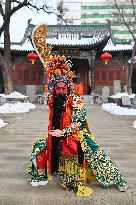
(240402) -- TAIYUAN, April 2, 2024 (Xinhua) -- Wu Lingyun practises acting moves of Jin Opera at the Temple of Guan Yu in Yingze District of Taiyuan, north China's Shanxi Province, Feb. 23, 2024. Jin Opera, originated in the central area of Shanxi Province, is a representative genre of opera in Shanxi. It was listed as a national intangible cultural heritage in 2006. Wu Lingyun, a representative inheritor of Jin Opera, was born in a family of Jin Opera actors and entered the opera troupe at the age of 12. In 1985, when he was 21, Wu started to play the role of Guan Yu, an ancient general known for his loyalty and bravery in battles and widely revered by the Chinese. In order to play the role well, Wu went through books on the history of Three Kingdoms period (220-280 A.D.) of China, learned from experienced actors and other genres of Chinese operas, and drew inspirations from sculpture, painting, shadow play and other art forms. After years of accumulation, the role of Guan Yu has become Wu Lingyun's repre

  •  
(ChineseToday)CHINA-SHANXI-JIN OPERA-INHERITOR (CN)

(ChineseToday)CHINA-SHANXI-JIN OPERA-INHERITOR (CN)

(240402) -- TAIYUAN, April 2, 2024 (Xinhua) -- Wu Lingyun practises at home in Xinghualing District of Taiyuan, north China's Shanxi Province, March 26, 2024. Jin Opera, originated in the central area of Shanxi Province, is a representative genre of opera in Shanxi. It was listed as a national intangible cultural heritage in 2006. Wu Lingyun, a representative inheritor of Jin Opera, was born in a family of Jin Opera actors and entered the opera troupe at the age of 12. In 1985, when he was 21, Wu started to play the role of Guan Yu, an ancient general known for his loyalty and bravery in battles and widely revered by the Chinese. In order to play the role well, Wu went through books on the history of Three Kingdoms period (220-280 A.D.) of China, learned from experienced actors and other genres of Chinese operas, and drew inspirations from sculpture, painting, shadow play and other art forms. After years of accumulation, the role of Guan Yu has become Wu Lingyun's representative performance. Decades of

  •  
(ChineseToday)CHINA-SHANXI-JIN OPERA-INHERITOR (CN)

(ChineseToday)CHINA-SHANXI-JIN OPERA-INHERITOR (CN)

(240402) -- TAIYUAN, April 2, 2024 (Xinhua) -- Wu Lingyun (L) interacts with the audience during a performance in Yingze District of Taiyuan, north China's Shanxi Province, Feb. 2, 2024. Jin Opera, originated in the central area of Shanxi Province, is a representative genre of opera in Shanxi. It was listed as a national intangible cultural heritage in 2006. Wu Lingyun, a representative inheritor of Jin Opera, was born in a family of Jin Opera actors and entered the opera troupe at the age of 12. In 1985, when he was 21, Wu started to play the role of Guan Yu, an ancient general known for his loyalty and bravery in battles and widely revered by the Chinese. In order to play the role well, Wu went through books on the history of Three Kingdoms period (220-280 A.D.) of China, learned from experienced actors and other genres of Chinese operas, and drew inspirations from sculpture, painting, shadow play and other art forms. After years of accumulation, the role of Guan Yu has become Wu Lingyun's representative

  •  
(ChineseToday)CHINA-SHANXI-JIN OPERA-INHERITOR (CN)

(ChineseToday)CHINA-SHANXI-JIN OPERA-INHERITOR (CN)

(240402) -- TAIYUAN, April 2, 2024 (Xinhua) -- Wu Lingyun prepares for performances at home in Xinghualing District of Taiyuan, north China's Shanxi Province, March 26, 2024. Jin Opera, originated in the central area of Shanxi Province, is a representative genre of opera in Shanxi. It was listed as a national intangible cultural heritage in 2006. Wu Lingyun, a representative inheritor of Jin Opera, was born in a family of Jin Opera actors and entered the opera troupe at the age of 12. In 1985, when he was 21, Wu started to play the role of Guan Yu, an ancient general known for his loyalty and bravery in battles and widely revered by the Chinese. In order to play the role well, Wu went through books on the history of Three Kingdoms period (220-280 A.D.) of China, learned from experienced actors and other genres of Chinese operas, and drew inspirations from sculpture, painting, shadow play and other art forms. After years of accumulation, the role of Guan Yu has become Wu Lingyun's representative performance

  •  
(ChineseToday)CHINA-SHANXI-JIN OPERA-INHERITOR (CN)

(ChineseToday)CHINA-SHANXI-JIN OPERA-INHERITOR (CN)

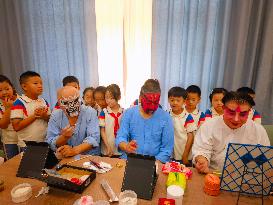
(240402) -- TAIYUAN, April 2, 2024 (Xinhua) -- Wu Lingyun (C, front) communicates with pupils at a primary school in Xinghualing District of Taiyuan, north China's Shanxi Province, June 26, 2023. Jin Opera, originated in the central area of Shanxi Province, is a representative genre of opera in Shanxi. It was listed as a national intangible cultural heritage in 2006. Wu Lingyun, a representative inheritor of Jin Opera, was born in a family of Jin Opera actors and entered the opera troupe at the age of 12. In 1985, when he was 21, Wu started to play the role of Guan Yu, an ancient general known for his loyalty and bravery in battles and widely revered by the Chinese. In order to play the role well, Wu went through books on the history of Three Kingdoms period (220-280 A.D.) of China, learned from experienced actors and other genres of Chinese operas, and drew inspirations from sculpture, painting, shadow play and other art forms. After years of accumulation, the role of Guan Yu has become Wu Lingyun's repre

  •  
(ChineseToday)CHINA-SHANXI-JIN OPERA-INHERITOR (CN)

(ChineseToday)CHINA-SHANXI-JIN OPERA-INHERITOR (CN)

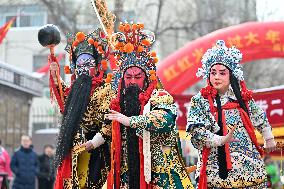
(240402) -- TAIYUAN, April 2, 2024 (Xinhua) -- Wu Lingyun (C) stages a performance in Yingze District of Taiyuan, north China's Shanxi Province, Feb. 2, 2024. Jin Opera, originated in the central area of Shanxi Province, is a representative genre of opera in Shanxi. It was listed as a national intangible cultural heritage in 2006. Wu Lingyun, a representative inheritor of Jin Opera, was born in a family of Jin Opera actors and entered the opera troupe at the age of 12. In 1985, when he was 21, Wu started to play the role of Guan Yu, an ancient general known for his loyalty and bravery in battles and widely revered by the Chinese. In order to play the role well, Wu went through books on the history of Three Kingdoms period (220-280 A.D.) of China, learned from experienced actors and other genres of Chinese operas, and drew inspirations from sculpture, painting, shadow play and other art forms. After years of accumulation, the role of Guan Yu has become Wu Lingyun's representative performance. Decades of

  •  
(ChineseToday)CHINA-SHANXI-JIN OPERA-INHERITOR (CN)

(ChineseToday)CHINA-SHANXI-JIN OPERA-INHERITOR (CN)

(240402) -- TAIYUAN, April 2, 2024 (Xinhua) -- Wu Lingyun practises acting moves of Jin Opera at the Temple of Guan Yu in Yingze District of Taiyuan, north China's Shanxi Province, Feb. 23, 2024. Jin Opera, originated in the central area of Shanxi Province, is a representative genre of opera in Shanxi. It was listed as a national intangible cultural heritage in 2006. Wu Lingyun, a representative inheritor of Jin Opera, was born in a family of Jin Opera actors and entered the opera troupe at the age of 12. In 1985, when he was 21, Wu started to play the role of Guan Yu, an ancient general known for his loyalty and bravery in battles and widely revered by the Chinese. In order to play the role well, Wu went through books on the history of Three Kingdoms period (220-280 A.D.) of China, learned from experienced actors and other genres of Chinese operas, and drew inspirations from sculpture, painting, shadow play and other art forms. After years of accumulation, the role of Guan Yu has become Wu Lingyun's repre

  •  
(ChineseToday)CHINA-SHANXI-JIN OPERA-INHERITOR (CN)

(ChineseToday)CHINA-SHANXI-JIN OPERA-INHERITOR (CN)

(240402) -- TAIYUAN, April 2, 2024 (Xinhua) -- Wu Lingyun prepares for a performance in Yingze District of Taiyuan, north China's Shanxi Province, Feb. 2, 2024. Jin Opera, originated in the central area of Shanxi Province, is a representative genre of opera in Shanxi. It was listed as a national intangible cultural heritage in 2006. Wu Lingyun, a representative inheritor of Jin Opera, was born in a family of Jin Opera actors and entered the opera troupe at the age of 12. In 1985, when he was 21, Wu started to play the role of Guan Yu, an ancient general known for his loyalty and bravery in battles and widely revered by the Chinese. In order to play the role well, Wu went through books on the history of Three Kingdoms period (220-280 A.D.) of China, learned from experienced actors and other genres of Chinese operas, and drew inspirations from sculpture, painting, shadow play and other art forms. After years of accumulation, the role of Guan Yu has become Wu Lingyun's representative performance. Decades o

  •  
(ChineseToday)CHINA-SHANXI-JIN OPERA-INHERITOR (CN)

(ChineseToday)CHINA-SHANXI-JIN OPERA-INHERITOR (CN)

(240402) -- TAIYUAN, April 2, 2024 (Xinhua) -- Wu Lingyun (C) and his troupe members take part in an activity in Honglai Township of Nan'an City, southeast China's Fujian Province, March 16, 2024. Jin Opera, originated in the central area of Shanxi Province, is a representative genre of opera in Shanxi. It was listed as a national intangible cultural heritage in 2006. Wu Lingyun, a representative inheritor of Jin Opera, was born in a family of Jin Opera actors and entered the opera troupe at the age of 12. In 1985, when he was 21, Wu started to play the role of Guan Yu, an ancient general known for his loyalty and bravery in battles and widely revered by the Chinese. In order to play the role well, Wu went through books on the history of Three Kingdoms period (220-280 A.D.) of China, learned from experienced actors and other genres of Chinese operas, and drew inspirations from sculpture, painting, shadow play and other art forms. After years of accumulation, the role of Guan Yu has become Wu Lingyun's repr

  •  
(ChineseToday)CHINA-SHANXI-JIN OPERA-INHERITOR (CN)

(ChineseToday)CHINA-SHANXI-JIN OPERA-INHERITOR (CN)

(240402) -- TAIYUAN, April 2, 2024 (Xinhua) -- Wu Lingyun arranges props at the Jin Opera art research institute in Taiyuan, north China's Shanxi Province, Feb. 6, 2024. Jin Opera, originated in the central area of Shanxi Province, is a representative genre of opera in Shanxi. It was listed as a national intangible cultural heritage in 2006. Wu Lingyun, a representative inheritor of Jin Opera, was born in a family of Jin Opera actors and entered the opera troupe at the age of 12. In 1985, when he was 21, Wu started to play the role of Guan Yu, an ancient general known for his loyalty and bravery in battles and widely revered by the Chinese. In order to play the role well, Wu went through books on the history of Three Kingdoms period (220-280 A.D.) of China, learned from experienced actors and other genres of Chinese operas, and drew inspirations from sculpture, painting, shadow play and other art forms. After years of accumulation, the role of Guan Yu has become Wu Lingyun's representative performance.

  •  
(ChineseToday)CHINA-SHANXI-JIN OPERA-INHERITOR (CN)

(ChineseToday)CHINA-SHANXI-JIN OPERA-INHERITOR (CN)

(240402) -- TAIYUAN, April 2, 2024 (Xinhua) -- Wu Lingyun stages a performance in Yingze District of Taiyuan, north China's Shanxi Province, Feb. 23, 2024. Jin Opera, originated in the central area of Shanxi Province, is a representative genre of opera in Shanxi. It was listed as a national intangible cultural heritage in 2006. Wu Lingyun, a representative inheritor of Jin Opera, was born in a family of Jin Opera actors and entered the opera troupe at the age of 12. In 1985, when he was 21, Wu started to play the role of Guan Yu, an ancient general known for his loyalty and bravery in battles and widely revered by the Chinese. In order to play the role well, Wu went through books on the history of Three Kingdoms period (220-280 A.D.) of China, learned from experienced actors and other genres of Chinese operas, and drew inspirations from sculpture, painting, shadow play and other art forms. After years of accumulation, the role of Guan Yu has become Wu Lingyun's representative performance. Decades of sta

  •  
(ChineseToday)CHINA-SHANXI-JIN OPERA-INHERITOR (CN)

(ChineseToday)CHINA-SHANXI-JIN OPERA-INHERITOR (CN)

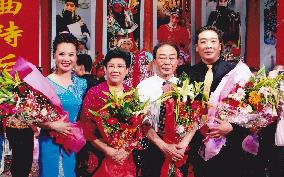
(240402) -- TAIYUAN, April 2, 2024 (Xinhua) -- This is an undated file photo of Wu Lingyun (1st R) and his wife Wang Chunmei (1st L), his mother Yan Huizhen (2nd L), and his father Wu Zhong. All of them are China's national first-class actors. Jin Opera, originated in the central area of Shanxi Province, is a representative genre of opera in Shanxi. It was listed as a national intangible cultural heritage in 2006. Wu Lingyun, a representative inheritor of Jin Opera, was born in a family of Jin Opera actors and entered the opera troupe at the age of 12. In 1985, when he was 21, Wu started to play the role of Guan Yu, an ancient general known for his loyalty and bravery in battles and widely revered by the Chinese. In order to play the role well, Wu went through books on the history of Three Kingdoms period (220-280 A.D.) of China, learned from experienced actors and other genres of Chinese operas, and drew inspirations from sculpture, painting, shadow play and other art forms. After years of accumulation, t

  •  
(ChineseToday)CHINA-SHANXI-JIN OPERA-INHERITOR (CN)

(ChineseToday)CHINA-SHANXI-JIN OPERA-INHERITOR (CN)

(240402) -- TAIYUAN, April 2, 2024 (Xinhua) -- Wu Lingyun (C) stages a performance in Yingze District of Taiyuan, north China's Shanxi Province, Feb. 23, 2024. Jin Opera, originated in the central area of Shanxi Province, is a representative genre of opera in Shanxi. It was listed as a national intangible cultural heritage in 2006. Wu Lingyun, a representative inheritor of Jin Opera, was born in a family of Jin Opera actors and entered the opera troupe at the age of 12. In 1985, when he was 21, Wu started to play the role of Guan Yu, an ancient general known for his loyalty and bravery in battles and widely revered by the Chinese. In order to play the role well, Wu went through books on the history of Three Kingdoms period (220-280 A.D.) of China, learned from experienced actors and other genres of Chinese operas, and drew inspirations from sculpture, painting, shadow play and other art forms. After years of accumulation, the role of Guan Yu has become Wu Lingyun's representative performance. Decades of

  •  
(ChineseToday)CHINA-SHANXI-JIN OPERA-INHERITOR (CN)

(ChineseToday)CHINA-SHANXI-JIN OPERA-INHERITOR (CN)

(240402) -- TAIYUAN, April 2, 2024 (Xinhua) -- Wu Lingyun stages a performance in Yingze District of Taiyuan, north China's Shanxi Province, Feb. 23, 2024. Jin Opera, originated in the central area of Shanxi Province, is a representative genre of opera in Shanxi. It was listed as a national intangible cultural heritage in 2006. Wu Lingyun, a representative inheritor of Jin Opera, was born in a family of Jin Opera actors and entered the opera troupe at the age of 12. In 1985, when he was 21, Wu started to play the role of Guan Yu, an ancient general known for his loyalty and bravery in battles and widely revered by the Chinese. In order to play the role well, Wu went through books on the history of Three Kingdoms period (220-280 A.D.) of China, learned from experienced actors and other genres of Chinese operas, and drew inspirations from sculpture, painting, shadow play and other art forms. After years of accumulation, the role of Guan Yu has become Wu Lingyun's representative performance. Decades of sta

  •  
(ChineseToday)CHINA-SHANXI-JIN OPERA-INHERITOR (CN)

(ChineseToday)CHINA-SHANXI-JIN OPERA-INHERITOR (CN)

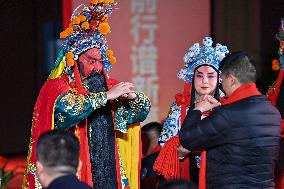
(240402) -- TAIYUAN, April 2, 2024 (Xinhua) -- Wu Lingyun checks the props ahead of a performance in Yingze District of Taiyuan, north China's Shanxi Province, Feb. 2, 2024. Jin Opera, originated in the central area of Shanxi Province, is a representative genre of opera in Shanxi. It was listed as a national intangible cultural heritage in 2006. Wu Lingyun, a representative inheritor of Jin Opera, was born in a family of Jin Opera actors and entered the opera troupe at the age of 12. In 1985, when he was 21, Wu started to play the role of Guan Yu, an ancient general known for his loyalty and bravery in battles and widely revered by the Chinese. In order to play the role well, Wu went through books on the history of Three Kingdoms period (220-280 A.D.) of China, learned from experienced actors and other genres of Chinese operas, and drew inspirations from sculpture, painting, shadow play and other art forms. After years of accumulation, the role of Guan Yu has become Wu Lingyun's representative performance.

  •  
(ChineseToday)CHINA-SHANXI-JIN OPERA-INHERITOR (CN)

(ChineseToday)CHINA-SHANXI-JIN OPERA-INHERITOR (CN)

(240402) -- TAIYUAN, April 2, 2024 (Xinhua) -- Wu Lingyun (R) prepares for a performance at the Temple of Guan Yu in Yingze District of Taiyuan, north China's Shanxi Province, Feb. 23, 2024. Jin Opera, originated in the central area of Shanxi Province, is a representative genre of opera in Shanxi. It was listed as a national intangible cultural heritage in 2006. Wu Lingyun, a representative inheritor of Jin Opera, was born in a family of Jin Opera actors and entered the opera troupe at the age of 12. In 1985, when he was 21, Wu started to play the role of Guan Yu, an ancient general known for his loyalty and bravery in battles and widely revered by the Chinese. In order to play the role well, Wu went through books on the history of Three Kingdoms period (220-280 A.D.) of China, learned from experienced actors and other genres of Chinese operas, and drew inspirations from sculpture, painting, shadow play and other art forms. After years of accumulation, the role of Guan Yu has become Wu Lingyun's representa

  •  

A dike patroller's decades-long endeavor in protecting Yellow River

STORY: A dike patroller's decades-long endeavor in protecting Yellow River DATELINE: April 2, 2023 LENGTH: 00:02:15 LOCATION: ORDOS, China CATEGORY: ENVIRONMENT/SOCIETY SHOTLIST: 1. various of Liang Liping patrolling the dikes 2. SOUNDBITE 1 (Chinese): LIANG LIPING, Dalad Banner Water Resources Bureau, north China's Inner Mongolia 3. various of the Yellow River basin 4. various of Liang Liping patrolling the dikes 5. SOUNDBITE 2 (Chinese): LIANG LIPING, Dalad Banner Water Resources Bureau, north China's Inner Mongolia 6. various of Liang Liping 7. SOUNDBITE 3 (Chinese): LIANG LIPING, Dalad Banner Water Resources Bureau, north China's Inner Mongolia 8. various of the Yellow River basin STORYLINE: As spring comes, Liang Liping starts his daily routine of patrolling the dikes along the Yellow River, China's second-longest waterway. He has been doing this job for 38 years. SOUNDBITE 1 (Chinese): LIANG LIPING, Dalad Banner Water Resources Bureau, north China's Inner Mongolia "I came here in 1985. My job is mai

  •  
Two-time Olympic judo champion Saito dies at age 54

Two-time Olympic judo champion Saito dies at age 54

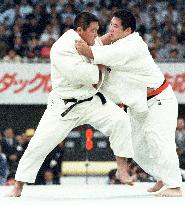
TOKYO, Japan - File photo taken April 1985 shows Hitoshi Saito (R) competing with Yasuhiro Yamashita during the All-Japan judo championship in Tokyo. Saito, a two-time Olympic judo champion and head of the All Japan Judo Federation's committee for enhancement, died of intrahepatic bile duct cancer in Osaka on Jan. 20, 2015.

  •  
Suu Kyi in Japan

Suu Kyi in Japan

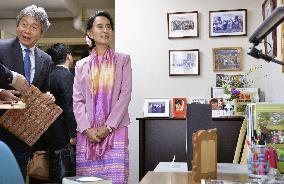
KYOTO, Japan - Myanmar opposition leader Aung San Suu Kyi (2nd from L) visits "Suu Kyi Room," which used to be her research room, at Kyoto University in Kyoto, western Japan, on April 15, 2013. She was a visiting scholar for nine months in 1985 and 1986 at the university. (Pool photo)

  •  
JAL unveils wreckage of 1985 jumbo jet crash for display

JAL unveils wreckage of 1985 jumbo jet crash for display

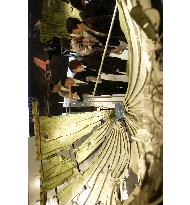
TOKYO, Japan - Japan Airlines Corp. unveiled to the media April 19 a facility for displaying the wreckage (shown in photo) of one of its jumbo jets that crashed in mountains in eastern Japan in 1985 with the loss of 520 lives. The Safety Promotion Center, located inside a building at Tokyo's Haneda airport, will be open to the public from April 24.

  •  
Sakaguchi not part of pension scheme in 1984-1985

Sakaguchi not part of pension scheme in 1984-1985

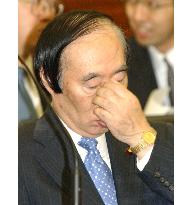
TOKYO, Japan - Health, Labor and Welfare Minister Chikara Sakuguchi, who is in charge of Japan's pension schemes, tells a House of Councillors committee he did not participate in the national pension plan in 1984 and 1985 before lawmakers were required to join it in April 1986.

  • Main
  • Top
  • Editorial
  • Creative
  • About Us
  • About ILG
  • Terms of use
  • Company
  • BEHIND
  • Price List
  • Single Plan
  • Monthly Plan
  • Services
  • Shooting
  • Rights Clearance
  • Support
  • FAQ
  • How To Buy
  • Contact Us
  • Become a Partner

© KYODO NEWS IMAGES INC

All Rights Reserved.

  • Editorial
  • Olympics
  • News
  • Sports
  • Japan
  • Tech
  • Royal
  • Disaster
  • NorthKorea
  • Old Japan
  • SNS

  • Creative
  • Food
  • Japan
  • Landscape
  • Animal
  • Popular
  • #Ukraine
  • #China
  • #coronavirus
  • #N. Korea
  • #Thailand
  • #Russia
  • #Ukraine
  • #China
  • #coronavirus
  • #N. Korea
  • #Thailand
  • #Russia
  • Food
  • Japan
  • Landscape
  • Animal
  • Olympics
  • News
  • Sports
  • Japan
  • Tech
  • Royal
  • Disaster
  • NorthKorea
  • Old Japan
  • SNS